Despite massive layoffs in the tech sector over the last few years, the demand for AI specialists remains at a fever pitch.
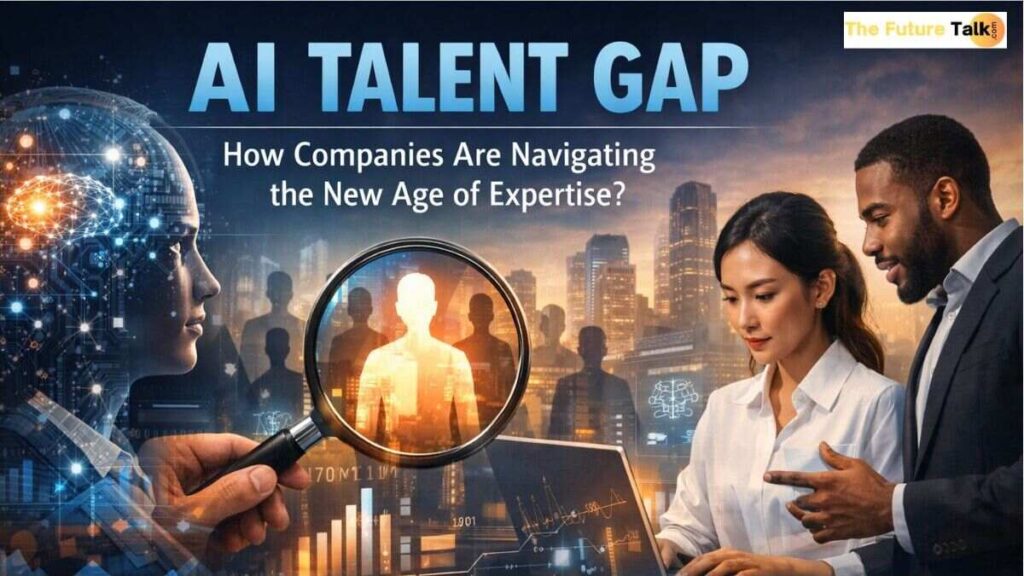
The artificial intelligence revolution has moved beyond just computing power to a high-stakes battle for human expertise. While jobs are being displaced with automation, many companies are on the hunt for AI talent despite massive layoffs in the tech sector over the last year.
The current trend suggests that top companies are finding it difficult to hire talent fast enough, creating the great AI talent gap. The gap is not just about a lack of coders, but a multi-dimensional gap in highly specific skills. Factors like sector-specific demands and geopolitical competition have converged to create this talent war.
AI Talent Shortage
Several critical factors contribute to the disparity between the demand for and the available supply of skills in Artificial Intelligence, which are as follows:
- Explosive Growth of Generative AI: The rapid integration of Large Language Models (LLMs) into mainstream use has led to an immediate demand for almost nonexistent roles just a few years ago, such as Prompt Engineers and AI Ethicists.
- The Experience Paradox: Companies often seek senior experts with five to ten years of experience in technologies that have only been widely available and commercially practical for a fraction of that time, perhaps two or three years.
- Specialized Skill Sets: It is not solely a matter of coding; success demands a unique combination of mathematics, data science, and specialized domain knowledge (for instance, understanding AI’s applications in fields such as healthcare or law).
Also Read: How Can CFO’s Unlock New Business Opportunities With Generative AI?
Global and Economic Impacts of AI Talent Shortage
The shortage of AI talent is not just a worry for recruiters, but it has geopolitical and economic consequences:
| Impact Area | Description |
| Global Competition | The global competition for a strategic advantage in AI is defined by an intense competition between countries such as the US and China to attract and retain the world’s talented AI researchers. |
| Salary Inflation | The most skilled AI researchers and engineers are getting compensation packages valued in the millions of dollars, often including substantial equity ownership. |
| Industry Shifts | AI is fundamentally reshaping industries like film and media. However, the pace of this change is constrained by the ability of these sectors to rapidly train or recruit professionals capable of managing these emerging tools. |
AI Talent Gap: How Organizations are Responding?
To close the AI talent gap, companies are shifting from traditional hiring methods to more innovative strategies.”
- Internal Upskilling: Companies are now prioritizing the upskilling of their existing software engineers in AI frameworks such as PyTorch or TensorFlow, rather than hunting for external hires.
- Strategic Partnerships: Instead of developing all AI capabilities internally, companies are increasingly partnering with cloud providers and specialized AI companies. For instance, Yatra’s partnership with Google Cloud is aimed at scaling its AI-led travel and expense automation.
- The “Tasker” Economy: Training AI models demands extensive manual data scraping and labeling, a task many firms delegate to a large, worldwide network of gig workers. However, this approach comes with considerable difficulties related to ethical concerns and maintaining quality control.
Also Read: How No-Code AI is Democratizing AI Development
The “Blue-Collar” Perspective
The current threat of AI to white-collar jobs has brought the value of physical trades into focus, sparking debate. Some reports suggest that traditional blue-collar jobs may face less immediate risk from AI automation than certain mid-level data-centric roles, hinting at a potential shift in the future labor market’s priorities.
The global AI talent shortage highlights a fundamental and lasting shift in the labor market, not just a short-term hiring challenge. Success in this digital age will depend less on technological capacity, such as the size of a GPU cluster, and more on a company’s ability to develop and keep human talent.
The key learning for businesses is: the most valuable “intelligence” remains human. To win the AI talent war, companies must shift their focus from searching for the “perfect” candidate to actively building the systems necessary to cultivate the talent they need.
Stay tuned to The Future Talk for latest updates. Comment your thoughts and join the conversation.