As we look toward the remainder of 2026, the relationship between AI and energy is reaching a critical inflection point.
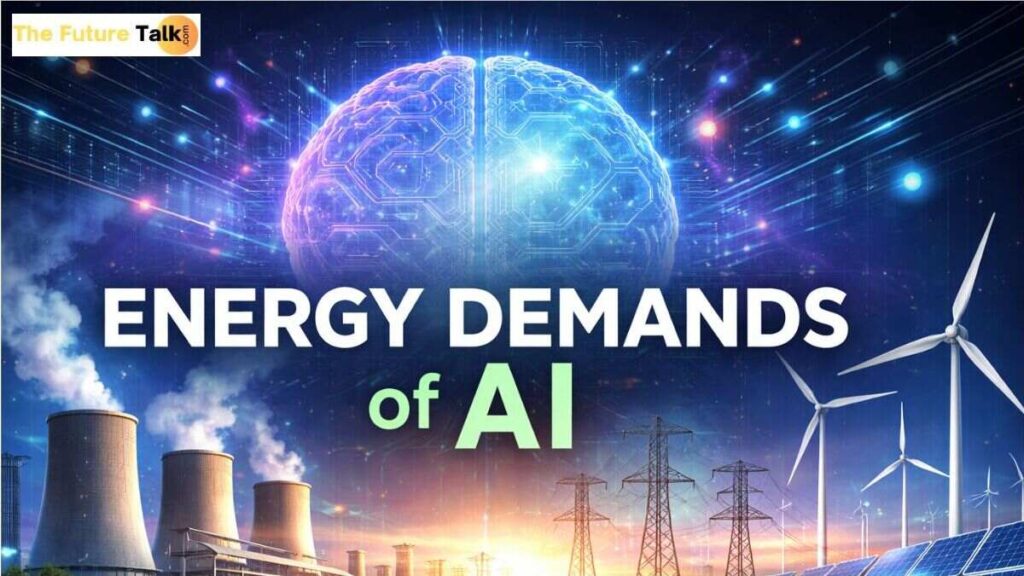
As of April 2026, the discussion around energy consumption of artificial intelligence (AI) is no longer focused on speculative “alarmism” but on the complex dynamic between unprecedented demand and drastic efficiency breakthroughs. This shift positions data centers not only as major energy consumers, but increasingly as key drivers for the overall global energy transition.
Data centers, the physical engine rooms of artificial intelligence, have become some of the world’s fastest-growing electricity consumers, sparking a high-stakes race between technological ambition and environmental sustainability.
A Growing Footprint
Driven by the AI boom, current projections for 2026 indicate a significant increase in both global and regional electricity consumption.
- Global Consumption: Data centers are projected to consume more than 500 Terawatt-hours (TWh) worldwide in 2026, constituting approximately 2% of the planet’s total electricity consumption. This represents an increase from the 1.5% share estimated for 2024.
- National Impact: By 2030, data center power consumption in the U.S. is projected to reach nearly 9% of the country’s total demand. This increase is already leading to higher consumer electricity costs, particularly in areas with high concentrations of technology.
- Regional Hotspots: Data centers in Ireland, a major tech hub, are projected to consume 32% of the country’s electricity by the end of 2026. This consumption is particularly focused in Dublin, where these facilities already account for almost 80% of the city’s power load.
Also Read: AI Investment Hits a Fever Pitch in 2026
Efficiency Breakthroughs
The year 2026 has witnessed significant advancements in AI efficiency, even as demand continues to grow.
- Neuro-Symbolic AI: A major development is the emergence of Neuro-Symbolic AI in early 2026. This technology integrates neural networks with symbolic reasoning, resulting in drastically improved performance. It has been shown to minimize training times from days to minutes and enhance accuracy, all while achieving a remarkable 100-fold decrease in energy consumption.
- AI-Optimized Energy Routers: Advanced semiconductor technologies, such as the implementation of energy routers in data centers, offer a significant reduction in the rated power requirement, up to 40% for a 1GW load. This innovation has the potential to save hundreds of millions in infrastructure costs.
Also Read: When Will We Achieve Artificial General Intelligence (AGI)?
The Circular Data Center
The industry is shifting towards “carbon-negative” and “water-positive” designs in 2026.
- Waste Heat Recovery: A key development is the repurposing of waste heat from AI data centers, as highlighted by EU’s March 2026 research. This waste heat is now being utilized for both water purification and direct air carbon capture.
- Energy Generation: To address the unpredictable nature of renewable energy, major companies like Hanwha Qcells are now combining AI with solar and Energy Storage Systems (ESS). This integration is crucial for guaranteeing that the significant energy demands of AI are supplied by clean energy sources, rather than relying on fossil fuels.
AI Energy Evolution (2024 vs. 2026)
| Particulars | 2024 Status | 2026 Projection/Status |
| Global Electricity Share | ~1.5% | ~2.0% |
| Primary Power Source | Grid-heavy (Mixed) | Rapid shift to Captive Renewables & ESS |
| Training Efficiency | High-energy “Brute Force” | Rise of Neuro-Symbolic Hybrid Models |
| Environmental Role | Passive Consumer | Emerging Carbon-Negative, Water-Positive Hubs |
The rapid rise of generative AI has fundamentally reshaped the global energy landscape. As we move through 2024 and into 2026, the AI boom is no longer just a software revolution; it is a massive infrastructure challenge.
Through a combination of nuclear innovation, renewable investment, and radical algorithmic efficiency, the tech industry is attempting to prove that the most powerful tool in human history can also be its most sustainable.
Must Read: NVIDIA’s AI Factories: Powering the $100 Trillion Intelligence Economy
By combining nuclear innovation, renewable investment, and radical algorithmic efficiency, the tech industry is attempting to prove that the most powerful tool in human history can also be its most sustainable.
Stay tuned to The Future Talk for latest updates. Comment your thoughts and join the conversation.